German Porcelain Match Holder Figurine Antique Thuringia Mid 19th Century
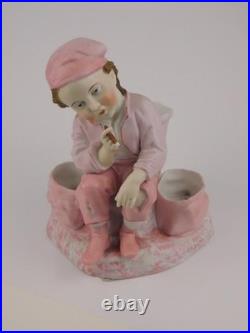

An authentic German porcelain match holder figurine, Mold No. 470, manufactured by the Limbach Porcelain Factory (Thuringia), featuring a hand-painted underglaze blue intertwined LG monogram, mid-19th century. ” The “Three Bags Design: The three bags or sacks surrounding the boy serve a functional purpose. Typically, one large open sack behind or beside the boy was used as a cigarette holder, one was a match holder, while the textured surfaces of the bags or the base acted as a match striker to light friction matches. The Painting Style: The “white with pink blush splash” refers to the classic hand-painted decoration technique applied to German bisque porcelain. The Subject Matter: Whimsical or slightly naughty children-such as a young boy secretly smoking a giant cigar or a pipe-were incredibly popular, humorous themes during the Victorian and Edwardian eras. The Letters: The “L” stands for Limbach, and the “G” stands for Greiner (Gotthelf Greiner, the factory’s founder). The Layout: The mark typically features a distinct diamond outline (sometimes crossed or stylized) with the cursive or block letters L and G nestled neatly inside or alongside the borders. It was traditionally painted by hand in a rich underglaze cobalt blue before the piece went into the kiln. Production Era: While the factory used various marks over its lifespan (including crossed L’s and clover leaves), this specific intertwined monogram layout represents Johann Gotthelf Greiner (the factory’s founder) and dates the figurine to the late 18th century to the mid-19th century (circa 1780s-1840s). German Porcelain Match Holder Figurine Antique Thuringia Mid 19th Century. Auctiva offers Free Image Hosting and Editing. Auctiva gets you noticed! Track Page Views With.